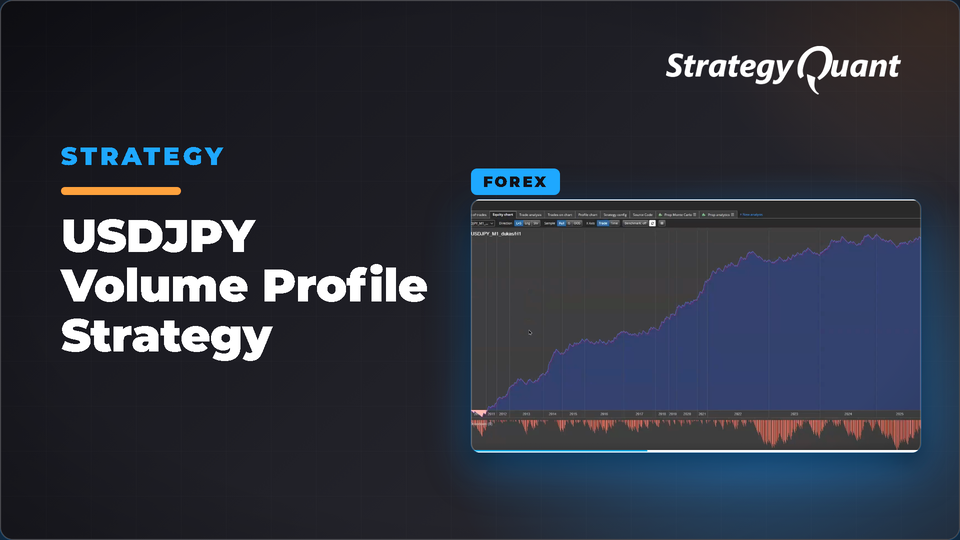
USDJPY trend-following strategy using Volume Profile and Point of Control to identify directional moves and market shifts. Designed for traders seeking robust systems based on market structure rather than traditional indicators.
The USDJPY Volume Profile strategy is a trend-following algorithmic trading strategy designed to identify strong directional moves using market structure and traded volume distribution. Instead of relying only on traditional indicators, this strategy uses Volume Profile data to detect whether the market is accepting higher prices and building momentum for a sustained trend.
The core logic is based on the Point of Control (POC), which represents the price level with the highest traded volume during the previous session. When the current POC starts moving away from the previous day’s POC, it signals a potential shift in market acceptance and the beginning of a trend. The strategy uses this information to enter trades in the direction of expanding value and increasing market participation.
Built and tested inside StrategyQuant X Build 144, the strategy was validated across thousands of generated variations using out-of-sample testing and 1-minute precision simulation. The results showed strong robustness, improved profitability, and reduced average drawdown compared to traditional approaches.
Key features of the strategy include:
• Volume Profile based trend detection
• Point of Control (POC) momentum confirmation
• Dynamic market structure analysis
• Optimized for USDJPY market behavior
• Large out-of-sample validation
• High percentage of profitable generated strategies
• Compatible with automated portfolio generation workflows
The strategy is designed primarily for traders looking for robust trend-following systems supported by market structure rather than lagging indicators alone. By combining Volume Profile with StrategyQuant’s large-scale strategy generation and validation engine, traders can create statistically stronger databanks with better long-term robustnes
Data settings
The strategy file stores the settings it was built with (engine MetaTrader5 (hedged), symbol USDJPY_M1_dukas, H1). When you retest it, select your own symbol, engine and costs.